If you work in sustainability or compliance, you’ve likely heard of CDP. It shows up in customer requests, investor questionnaires, and RFPs. For many teams, it quickly becomes a priority without much context on what it is or how to approach it. This guide breaks it down clearly so you can understand what CDP is, why it matters, and how to get started with confidence.
CDP (formerly known as the Carbon Disclosure Project) is a global disclosure system that allows companies to report environmental data in a standardized, comparable way. Companies respond to CDP questionnaires each year, sharing information on how they measure, manage, and reduce environmental impacts. That information is then used by investors, customers, and other stakeholders to evaluate performance and risk. For many organizations, CDP becomes the central framework that shapes how environmental data is collected, structured, and communicated.
What does CDP actually cover?
CDP is built around three scored modules and several additional, non-scored modules.
Climate Change
Climate Change is the most widely used questionnaire and often the starting point for new reporters.
It focuses on greenhouse gas (GHG) emissions (Scopes 1, 2, and often Scope 3), climate-related risks and opportunities, governance and strategy, and targets and transition planning
For many companies, these disclosures become the backbone of their broader ESG reporting.
Water
The water questionnaire looks at how companies manage water-related risks, especially in water-stressed regions. It covers water use and withdrawal, risk exposure across operations and value chains, and mitigation strategies.
Forests
The forests questionnaire focuses on deforestation-linked commodities and supply chain exposure to activities leading to deforestation. The forests questionnaire is unique in that companies receive an overall score as well as individual commodity scores.
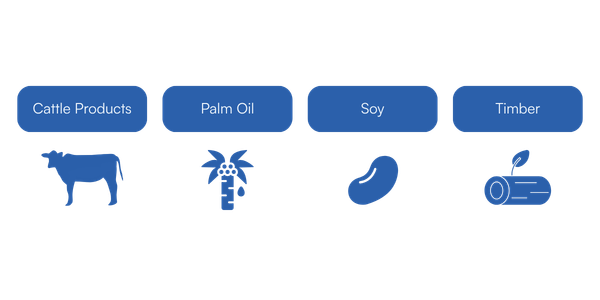
Historically, the scored commodities have included cattle products, palm oil, soy, and timber.
CDP has increased the number of scored commodities to align the questionnaire with best practices related to deforestation and forest-risk commodities.
Additional Disclosures
In addition to scored questionnaires, CDP includes optional modules covering biodiversity, plastics, and oceans. These modules are not scored, but the topics are becoming increasingly important. The sections allow companies to begin disclosing information on emerging environmental topics without impacting their CDP score.
They may be optional for now, but they clearly signal where expectations are heading. Companies who engage early will be better positioned as requirements evolve.
How does CDP scoring work?
At a high level, CDP responses are scored on a scale from F to A, based on how complete, transparent, and action-oriented the disclosure is. More specifically, it is a step-by-step system where companies must meet certain expectations before moving up.
Think of it less like a percentage score and more like a progression.
What often catches first-time reports off guard is that you cannot skip scoring levels. Specific criteria must be met at each level before the response can earn a higher score, even if other parts of the questionnaire are strong.
For example, a company may be actively managing its climate risks, which aligns with expectations in the B range, but if parts of the questionnaire are incomplete or missing required details, the score can still be capped at a D.
When does CDP reporting happen?
CDP follows an annual reporting cycle. For 2026 the response window opens the week of June 15th, and the Scoring Deadline is the week of September 14th; however, you should not wait until June 15th to get started.
Strong responses are built before the response window opens. When the questionnaire becomes available, you will know exactly what information is required to complete the report once the response window is open.
That gives companies from April 20th to June 15th to start collecting data before it is time to fill out the questionnaire.
Whether your questionnaire is in hand or not, you can begin collecting data on topics that we know CDP will be asking about year over year. This includes emissions data, details on climate-related risks and opportunities, governance structures, policies, and more.
Where teams struggle
Even experienced ESG and sustainability professionals can find CDP challenging at first. For new responders the priority is simple: complete and consistent disclosure.
This means answering every single question, even if the answer is selecting “no,” it still needs to be completed. Blank questions are the #1 thing that prevents companies from moving from a D score to a C score and beyond.
Another important aspect is consistency. CDP will often ask for related information in different parts of the questionnaire. The questions are not duplicates, but they are connected. When similar data or narratives appear in multiple places, they need to align. If they don’t, it raises flags and can hold the score back.
The biggest hurdle for new reporters is timing. The data collection process almost always takes longer than expected. What looks like a simple request at the start can quickly stretch into several days or weeks of hunting down the right information. Emails go unanswered, data is incomplete, and leadership wants to review everything before anything is finalized.
It may be difficult to avoid these issues entirely, but there are things you can do to mitigate their impact on your CDP response and, let’s be honest, your stress.
What to do next
If you need to respond to CDP and you’re not sure what to do next, I have two suggestions.
Get started:
Create or log into your CDP account. This gives you access to the questionnaire, allows you to assign contributors and reviewers, and helps you understand what is expected of your organization.
If your account is already set up, consider looking internally. Identify who will be able to share the information you need when it comes to reporting. Getting the right people involved early makes a noticeable difference once the response is underway.
Get help:
Especially if you are approaching CDP for the first time. A short conversation can help you understand what applies, identify gaps, and set a path forward.
If your goal is to improve your CDP score, getting support becomes even more important. It is not always obvious why a score landed where it did or which questions will have the biggest impact if improved. An Accredited Solutions Provider can help you interpret your results and focus your effort where it matters most.
How CEMAsys supports CDP reporting
As a CDP Gold Accredited Solutions Provider, CEMAsys helps companies turn CDP into a structured process.
We work with your team to clarify requirements, align responses with scoring expectations, and identify the areas that will have the greatest impact on your score. The focus is on building a process that is clear and repeatable year over year.
If you want to strengthen your response or better understand where to focus, reach out to the CEMAsys team to start the conversation.
Get access by filling in the form
Thank you for your interest - your file is now ready to download.
Oops! Something went wrong while submitting the form.
What is CDP?
CDP (formerly known as the Carbon Disclosure Project) is a global disclosure system that allows companies to report environmental data in a standardized, comparable way. Companies respond to CDP questionnaires each year, sharing information on how they measure, manage, and reduce environmental impacts. That information is then used by investors, customers, and other stakeholders to evaluate performance and risk. For many organizations, CDP becomes the central framework that shapes how environmental data is collected, structured, and communicated.
What does CDP actually cover?
CDP is built around three scored modules and several additional, non-scored modules.
Climate Change
Climate Change is the most widely used questionnaire and often the starting point for new reporters.
It focuses on greenhouse gas (GHG) emissions (Scopes 1, 2, and often Scope 3), climate-related risks and opportunities, governance and strategy, and targets and transition planning
For many companies, these disclosures become the backbone of their broader ESG reporting.
Water
The water questionnaire looks at how companies manage water-related risks, especially in water-stressed regions. It covers water use and withdrawal, risk exposure across operations and value chains, and mitigation strategies.
Forests
The forests questionnaire focuses on deforestation-linked commodities and supply chain exposure to activities leading to deforestation. The forests questionnaire is unique in that companies receive an overall score as well as individual commodity scores.
Historically, the scored commodities have included cattle products, palm oil, soy, and timber.
CDP has increased the number of scored commodities to align the questionnaire with best practices related to deforestation and forest-risk commodities.
Additional Disclosures
In addition to scored questionnaires, CDP includes optional modules covering biodiversity, plastics, and oceans. These modules are not scored, but the topics are becoming increasingly important. The sections allow companies to begin disclosing information on emerging environmental topics without impacting their CDP score.
They may be optional for now, but they clearly signal where expectations are heading. Companies who engage early will be better positioned as requirements evolve.
How does CDP scoring work?
At a high level, CDP responses are scored on a scale from F to A, based on how complete, transparent, and action-oriented the disclosure is. More specifically, it is a step-by-step system where companies must meet certain expectations before moving up.
Think of it less like a percentage score and more like a progression.
What often catches first-time reports off guard is that you cannot skip scoring levels. Specific criteria must be met at each level before the response can earn a higher score, even if other parts of the questionnaire are strong.
For example, a company may be actively managing its climate risks, which aligns with expectations in the B range, but if parts of the questionnaire are incomplete or missing required details, the score can still be capped at a D.
When does CDP reporting happen?
CDP follows an annual reporting cycle. For 2026 the response window opens the week of June 15th, and the Scoring Deadline is the week of September 14th; however, you should not wait until June 15th to get started.
Strong responses are built before the response window opens. When the questionnaire becomes available, you will know exactly what information is required to complete the report once the response window is open.
That gives companies from April 20th to June 15th to start collecting data before it is time to fill out the questionnaire.
Whether your questionnaire is in hand or not, you can begin collecting data on topics that we know CDP will be asking about year over year. This includes emissions data, details on climate-related risks and opportunities, governance structures, policies, and more.
Where teams struggle
Even experienced ESG and sustainability professionals can find CDP challenging at first. For new responders the priority is simple: complete and consistent disclosure.
This means answering every single question, even if the answer is selecting “no,” it still needs to be completed. Blank questions are the #1 thing that prevents companies from moving from a D score to a C score and beyond.
Another important aspect is consistency. CDP will often ask for related information in different parts of the questionnaire. The questions are not duplicates, but they are connected. When similar data or narratives appear in multiple places, they need to align. If they don’t, it raises flags and can hold the score back.
The biggest hurdle for new reporters is timing. The data collection process almost always takes longer than expected. What looks like a simple request at the start can quickly stretch into several days or weeks of hunting down the right information. Emails go unanswered, data is incomplete, and leadership wants to review everything before anything is finalized.
It may be difficult to avoid these issues entirely, but there are things you can do to mitigate their impact on your CDP response and, let’s be honest, your stress.
What to do next
If you need to respond to CDP and you’re not sure what to do next, I have two suggestions.
Get started:
Create or log into your CDP account. This gives you access to the questionnaire, allows you to assign contributors and reviewers, and helps you understand what is expected of your organization.
If your account is already set up, consider looking internally. Identify who will be able to share the information you need when it comes to reporting. Getting the right people involved early makes a noticeable difference once the response is underway.
Get help:
Especially if you are approaching CDP for the first time. A short conversation can help you understand what applies, identify gaps, and set a path forward.
If your goal is to improve your CDP score, getting support becomes even more important. It is not always obvious why a score landed where it did or which questions will have the biggest impact if improved. An Accredited Solutions Provider can help you interpret your results and focus your effort where it matters most.
How CEMAsys supports CDP reporting
As a CDP Gold Accredited Solutions Provider, CEMAsys helps companies turn CDP into a structured process.
We work with your team to clarify requirements, align responses with scoring expectations, and identify the areas that will have the greatest impact on your score. The focus is on building a process that is clear and repeatable year over year.
If you want to strengthen your response or better understand where to focus, reach out to the CEMAsys team to start the conversation.
I’m a sustainability consultant focused on helping organizations turn climate ambition into practical action. I work with clients on sustainability strategy, ESG data management, and net-zero planning, drawing on both academic training and hands-on experience to make complex topics clear and usable for busy teams.
By clicking "Accept cookies", you consent to cookies being stored on your device to enhance site navigation, analyze site usage, and assist in our marketing efforts. See our privacy policy.
Thank you! Your submission has been received!
Oops! Something went wrong while submitting the form.







.avif)



-resized_compressed.avif)


